Designing battery materials. Connecting computation, AI and experiment.
We study how materials work and how to design them. Our research connects battery-material problems with atomistic modelling, AI and experimental methods.
We combine experimental and computational methods to understand materials properties and reaction mechanisms at the atomic scale and develop new energy storage materials, including electrodes and solid electrolytes for rechargeable batteries. First-principles calculations and density functional theory (DFT) connect atomic and electronic structures with ion transport, electrochemical reactions and degradation. Synthesis, characterization and cell testing help us discover new materials and validate predictions.
We also combine artificial intelligence (AI), machine learning (ML) and robotics in self-driving laboratories to accelerate battery materials development. These platforms collect large experimental datasets, search for promising materials, optimize compositions and synthesis conditions, and test predictions from AI and atomistic modeling through synthesis and measurements.
Keywords: lithium-ion batteries, electrodes, solid electrolytes, first-principles calculations, density functional theory (DFT), artificial intelligence, machine learning, self-driving lab.
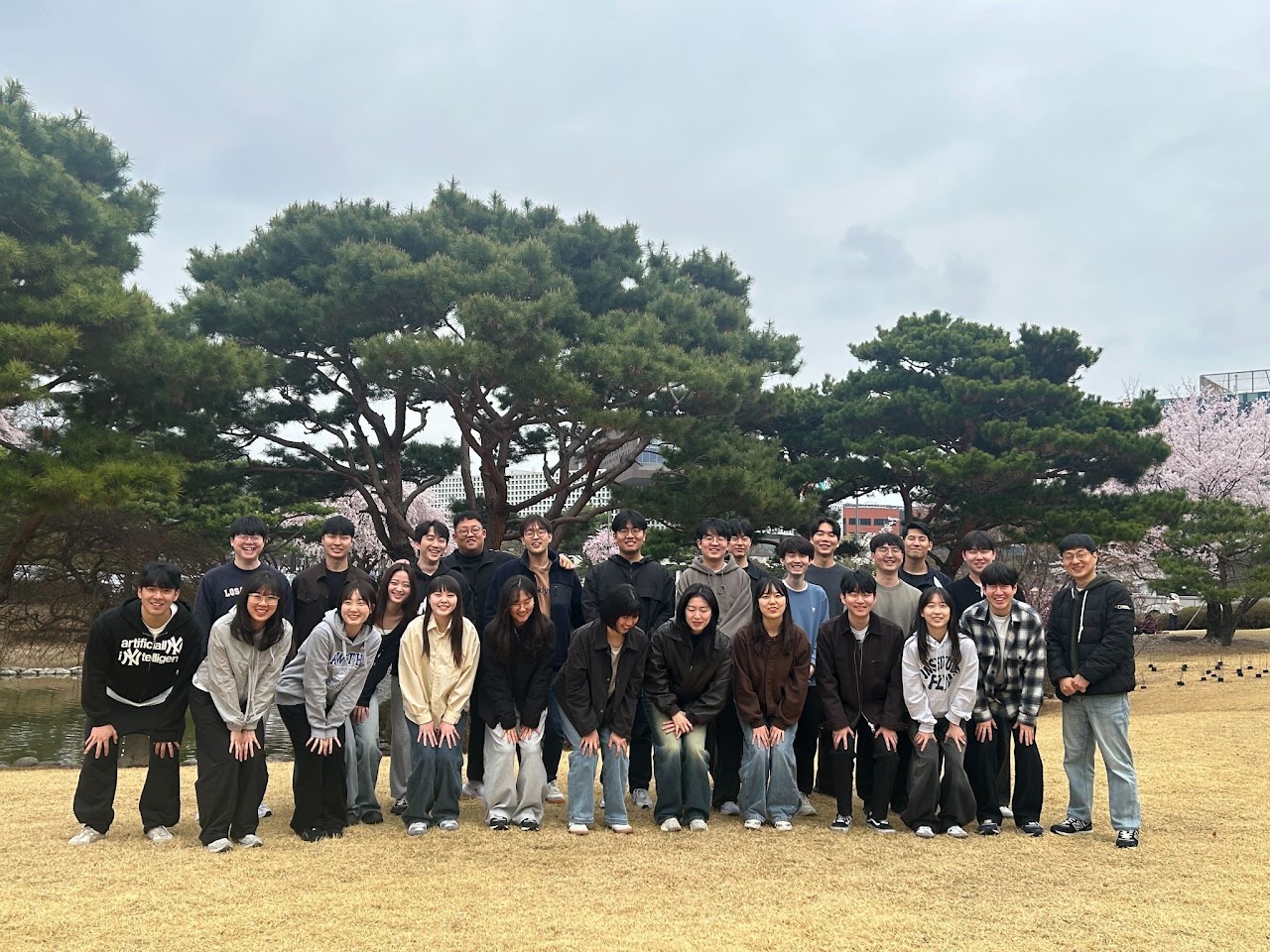
Computational Materials Design & Discovery Lab · KAIST Meet the group →
Research themes
Different methods. Connected questions.
Explore the materials we study and the methods we develop. A project can connect more than one theme.
01
Understand the material. Improve the design.
Discovering new electrode and electrolyte materials and understanding how local structure, synthesis pathways and reaction mechanisms govern ion transport, energy storage and degradation.
We are recruiting one government-funded master’s student for Spring 2027. Contact Prof. Dong-Hwa Seo at dseo@kaist.ac.kr or lab leader Hojoon Kim at hojoonkim@kaist.ac.kr.
Two postdoctoral positions are available through the UNIST InnoCORE program, with research based at KAIST. Help expand AI agents and self-driving laboratories for battery materials discovery. Send your CV and research plan to dseo@kaist.ac.kr.
Jaekyeong Han received a poster award at the LG Energy Solution Industry–Academia Conference for work on sodium-ion battery electrolytes using an autonomous battery system.
Youngkyung Kim†, Jae-Seung Kim†, Kwang Ho Shin, Jingyu Choi, Beom Jin Park, Jinyeong Choe, Jiwon Seo, Chanhyun Park, Jeongjae Lee, Dong-Hwa Seo*, Sung-Kyun Jung*
Seokjae Hong, Kwang Ho Shin, Kyoung Sun Kim, Jinhwan Kim, Jaegi Lee, Byung-Gun Park, Won G. Hong, In Hye Kwak, Kyubin Shim, Young-Sang Yu, Ju Young Kim, Young Hwa Jung, Min Wook Pin, Hyeon-Jong Lee, Hojoon Kim, Dong-Hwa Seo, Hosun Shin, Dongju Lee, Seung-Ho Yu, Sung-Kyun Jung*, Hyungsub Kim*
Changhoon Kim†, Jae-Seung Kim†, Juhyoun Park, Jun Pyo Son, Jaehan Park, Seokjae Hong, Youngsu Lee, Kyu-Young Park, Hyungsub Kim, Dong-Hwa Seo*, Yoon Seok Jung*
Yoo-Jong Park, Jaekyeong Han, Hojoon Kim, Ukseon Shin, Byounghun Jung, Yongbeom Kim, Seong Ji Ye, Byungjin Choi, Jae-Sun Shin, Eunryeol Lee, Dong-Hwa Seo*
Mingi Hwang, Jae Hong Choi, Songyi Lee, Junhyeok Hwang, Sungwoo Park, Sumyeong Choi, Minhu Kim, Heesoo Lim, Hyuntae Lim, Mirim Oh, Sumin Song, Geumju Shin, Minjoon Park, Youngki Kim, Dong-Hwa Seo, Pilgun Oh
 CMDD @ KAIST